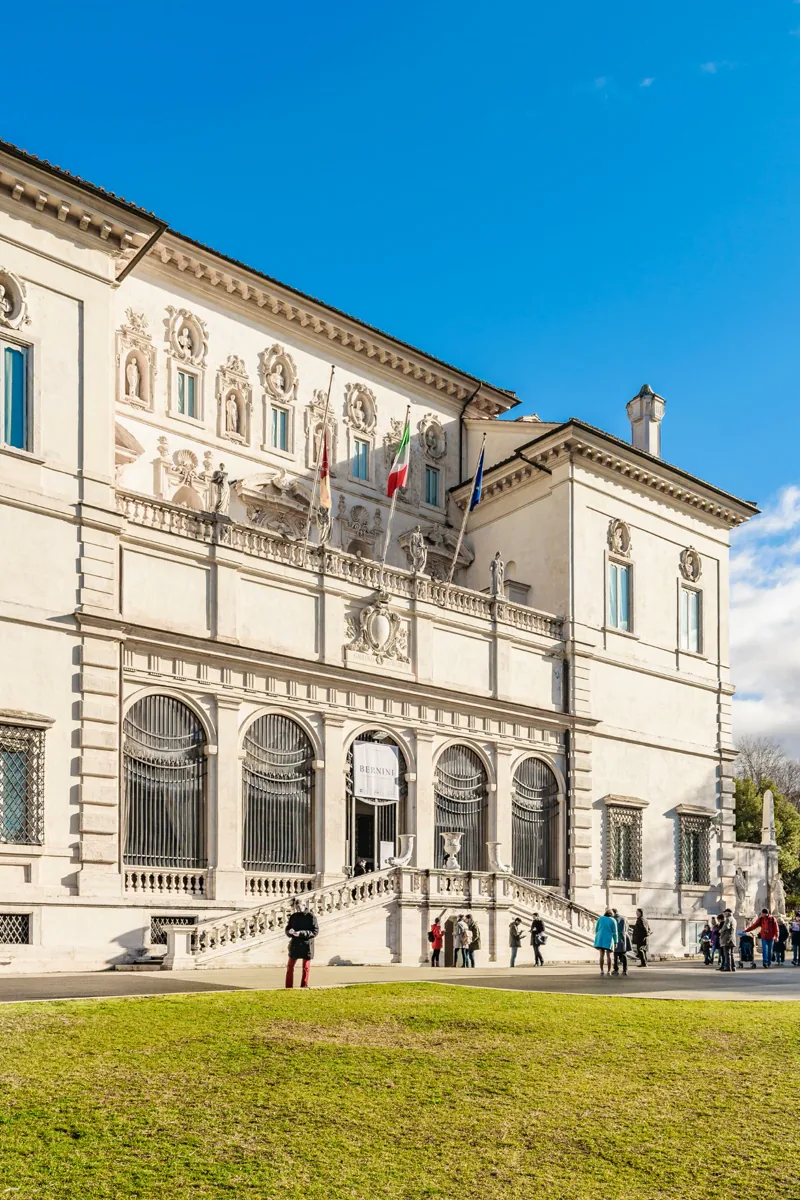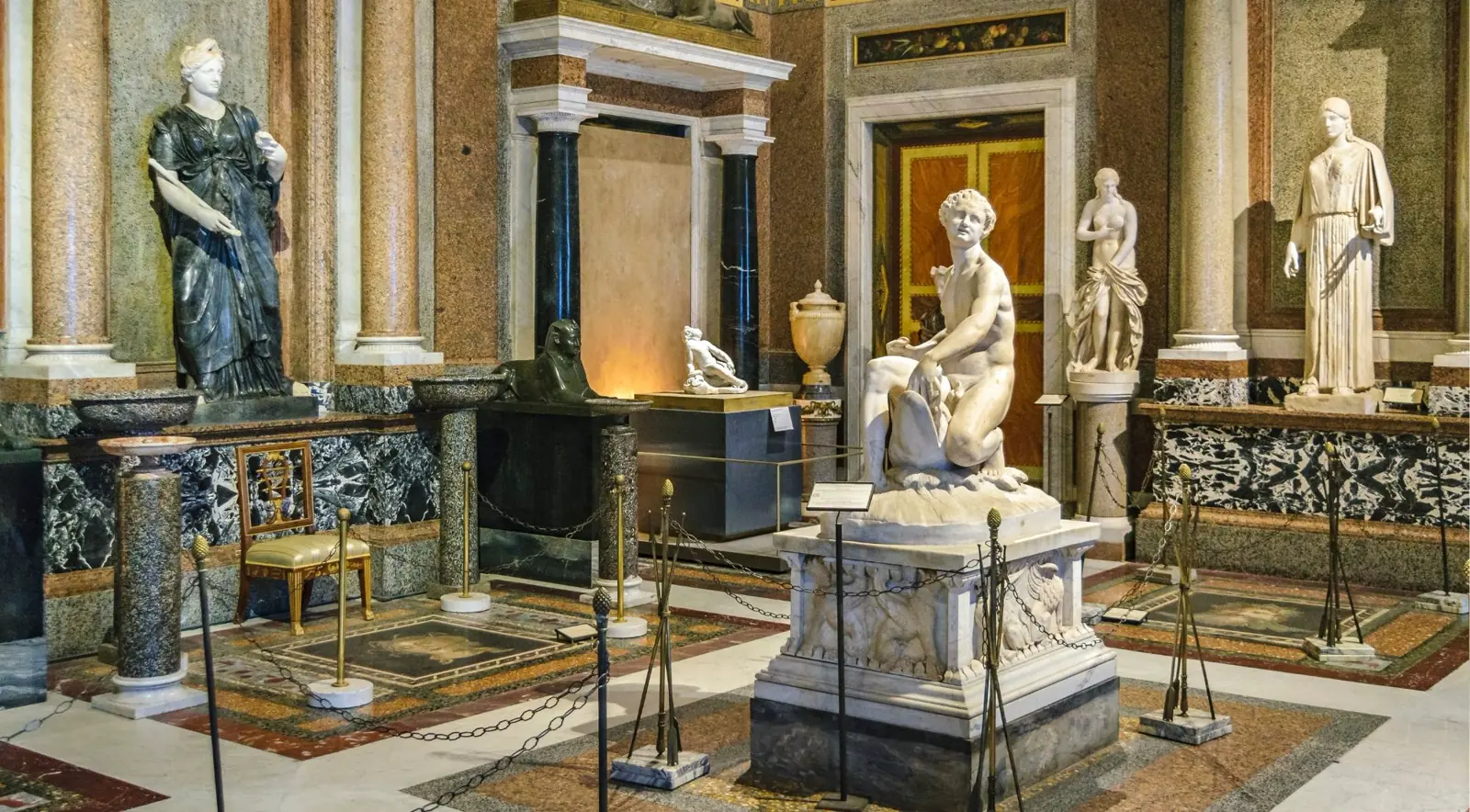
The Borghese Gallery holds the four great early marble groups by Gian Lorenzo Bernini (Naples 1598 – Rome 1680), all tied to the patronage of Cardinal Scipione Borghese: Aeneas, Anchises and Ascanius (1618–1619), The Rape of Proserpina (1621–1622), Apollo and Daphne (1622–1625), and David (1623–1624). He carved them between the ages of 20 and 26. They're all on the ground floor, in adjoining rooms. Seeing them requires a ticket with mandatory booking, in two-hour time slots.
Who was Gian Lorenzo Bernini
Gian Lorenzo Bernini was born in Naples in 1598, the son of the Florentine sculptor Pietro Bernini. Around 1605–1606 the family moved to Rome, where the very young Gian Lorenzo learned the technique of marble in his father's workshop, quickly achieving extraordinary skill: Pope Paul V declared he was destined to become "the Michelangelo of his century."
Bernini was the dominant figure of Roman Baroque — sculptor, architect, painter, and stage designer. After his early years in Scipione Borghese's service, he served a succession of popes: for Urban VIII he created the Baldacchino of St. Peter's, then the Cathedra, the colonnade of St. Peter's Square, the Fountain of the Four Rivers in Piazza Navona, and the Ecstasy of Saint Teresa. But it's at the Borghese Gallery that the crucial core of his artistic youth is concentrated.
Scipione Borghese, the patron
Cardinal Scipione Caffarelli Borghese (1577–1633), nephew of Pope Paul V, was Bernini's first great protector. He immediately recognized the talent of the artist, still barely more than a teenager, and commissioned him to create the sculptural groups for his suburban villa outside Porta Pinciana — today the Borghese Gallery. It was precisely this partnership that gave birth, "in the Borghese household," to the language of Baroque sculpture.
Other Rome experiences you shouldn't miss
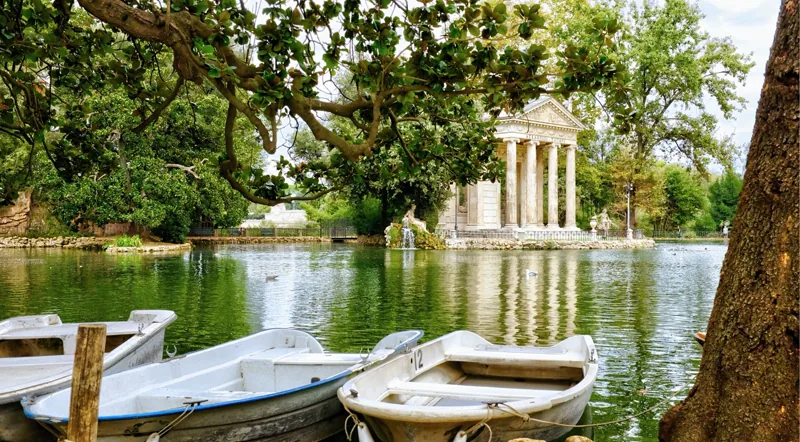
Anyone who loves Bernini finds a whole open-air itinerary in Rome: after the Borghese Gallery, it's worth seeking out the Ecstasy of Saint Teresa, the Fountain of the Four Rivers in Piazza Navona, and the colonnade of St. Peter's Square. Many visitors pair the museum with a guided tour on Bernini and Caravaggio, a walk through the Villa Borghese gardens and the Pincio terrace, or the classics like the Vatican Museums.
The four early masterpieces
The four great sculptures are all on the ground floor, in adjoining rooms. Following them in sequence means watching the artist evolve from the late-Mannerist residue of Aeneas to the full Baroque maturity of Apollo and Daphne.
| Work | Date | Room | Subject |
|---|---|---|---|
| Aeneas, Anchises and Ascanius | 1618–1619 | Room VI | The flight from Troy |
| The Rape of Proserpina | 1621–1622 | Room IV | Pluto's abduction |
| Apollo and Daphne | 1622–1625 | Room III | The metamorphosis into laurel |
| David | 1623–1624 | Room II | The instant before the throw |
Aeneas, Anchises and Ascanius (1618–1619) — Room VI
This is the first major group Bernini made for Scipione, when the artist was about twenty. Standing 220 cm tall, it depicts Aeneas fleeing burning Troy: Aeneas carries his elderly father Anchises on his shoulders, who holds the Penates statuettes, while young Ascanius carries the sacred fire of Vesta. The theme of the three ages of man is rendered masterfully through the differing treatment of skin — the soft flesh of the child, the taut flesh of the adult, the wrinkled flesh of the old man. The influence of his father Pietro and late-Mannerist taste is still strong, but the future Bernini already announces itself.
The Rape of Proserpina (1621–1622) — Room IV
Standing 255 cm tall, it depicts the abduction of the young Proserpina by Pluto, god of the underworld. Bernini captures the culminating moment of the action: the most famous detail is Pluto's hand sinking into Proserpina's thigh, compressing the marble flesh as if it were soft and yielding — a virtuosic feat that defies the physical limits of marble. Behind them, the three-headed dog Cerberus keeps watch. The spiral construction still recalls Giambologna, but the plastic power and sensual tenderness of the flesh are already fully Baroque.
Apollo and Daphne (1622–1625) — Room III
This is the absolute masterpiece, universally considered the pinnacle of Baroque sculpture. Standing 243 cm tall in Carrara marble, it illustrates the Ovidian myth: Apollo, struck by Cupid's arrow, pursues the nymph Daphne, who, to escape him, is transformed into a laurel tree. Bernini captures the exact instant of the metamorphosis: Apollo's fingers touch not flesh but the bark enveloping her body; her feet become roots, her hands and hair turn into fronds. Finely worked drilling renders the leaves and locks of hair moving in the wind. Apollo and Daphne is best viewed from the right side, where the transformation is most evident.
David (1623–1624) — Room II
Standing 170 cm tall, it's the only one of the four with a biblical subject. Bernini interrupted Apollo and Daphne and completed David in just seven months. His great innovation is the choice of moment: while Michelangelo's David is calmly waiting, Bernini's is caught in the middle of the action, his body twisted in a spiral, brow furrowed and lip bitten in concentration, in the instant before releasing the stone. Goliath isn't depicted: he remains in the viewer's space, which becomes part of the scene. The intensely focused face is, according to sources, a self-portrait of the young Bernini.
Pluto's hand sinking into Proserpina's flesh; Daphne's fingers and hair turning into leaves (from the right side); the twist and self-portrait face of David; the three skin textures of Aeneas. It's worth walking around each group: Baroque sculpture doesn't depict an event, but the happening of that event.
See Bernini with an art historian
A small-group guided tour is the best way to grasp the technical and narrative choices behind these marbles: the guide walks you right up to the originals during your two-hour slot, explaining why Apollo and Daphne changed the history of sculpture.
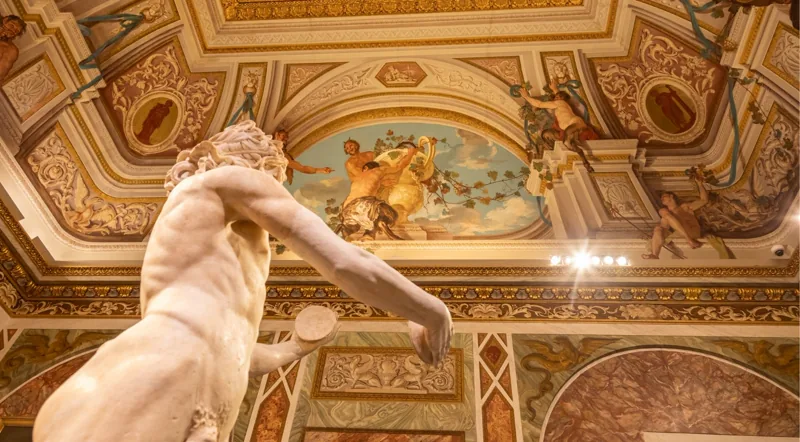
Small-group guided tour with skip-the-line entry
A licensed art historian guides you through Bernini's marbles, the Caravaggios, and Canova's Pauline at the pace of the 2-hour slot. Rated 4.7 from 2,700+ reviews.
Bernini's other works at the Gallery
- The busts of Cardinal Scipione Borghese (1632): two nearly identical portraits on the upper floor. A crack opened in the marble of the first during polishing (still visible); Bernini carved a second version in just a few days. They introduce the "conversation motif," with the head turned and lips parted, as if caught mid-conversation.
- The bust of Pope Paul V: a small marble portrait of Camillo Borghese, with a disputed date.
- Truth Unveiled by Time (1646–1652): standing 280 cm tall, it depicts Truth as a smiling young woman holding the sun; Bernini carved it for himself during a difficult period in his career. The figure of Time was never executed.
- The Amalthea Goat: a small, possibly very early group, with attribution still debated today.
- The paintings: Bernini was also a painter. The Gallery holds two self-portraits (young and mature) and a Portrait of a Boy.
For anyone who wants to focus solely on Bernini — his school, technique, and Cardinal Scipione's patronage program — the most flexible format is the private tour with a dedicated guide, which adapts the pace and themes to your interests.
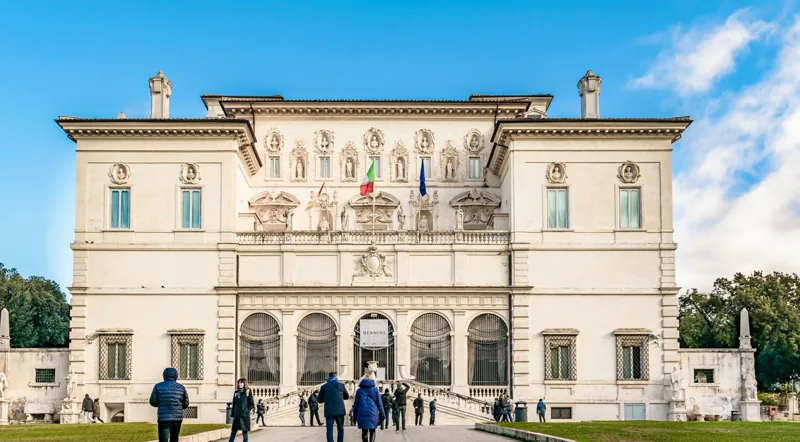
Private guided tour of the Borghese Gallery
Two hours with a guide all to yourself: focus on Bernini, Caravaggio, Canova, or whatever theme you prefer, at a personalized pace. Early reviews are a perfect 5/5.
Why the Borghese Gallery is "the" place to see Bernini
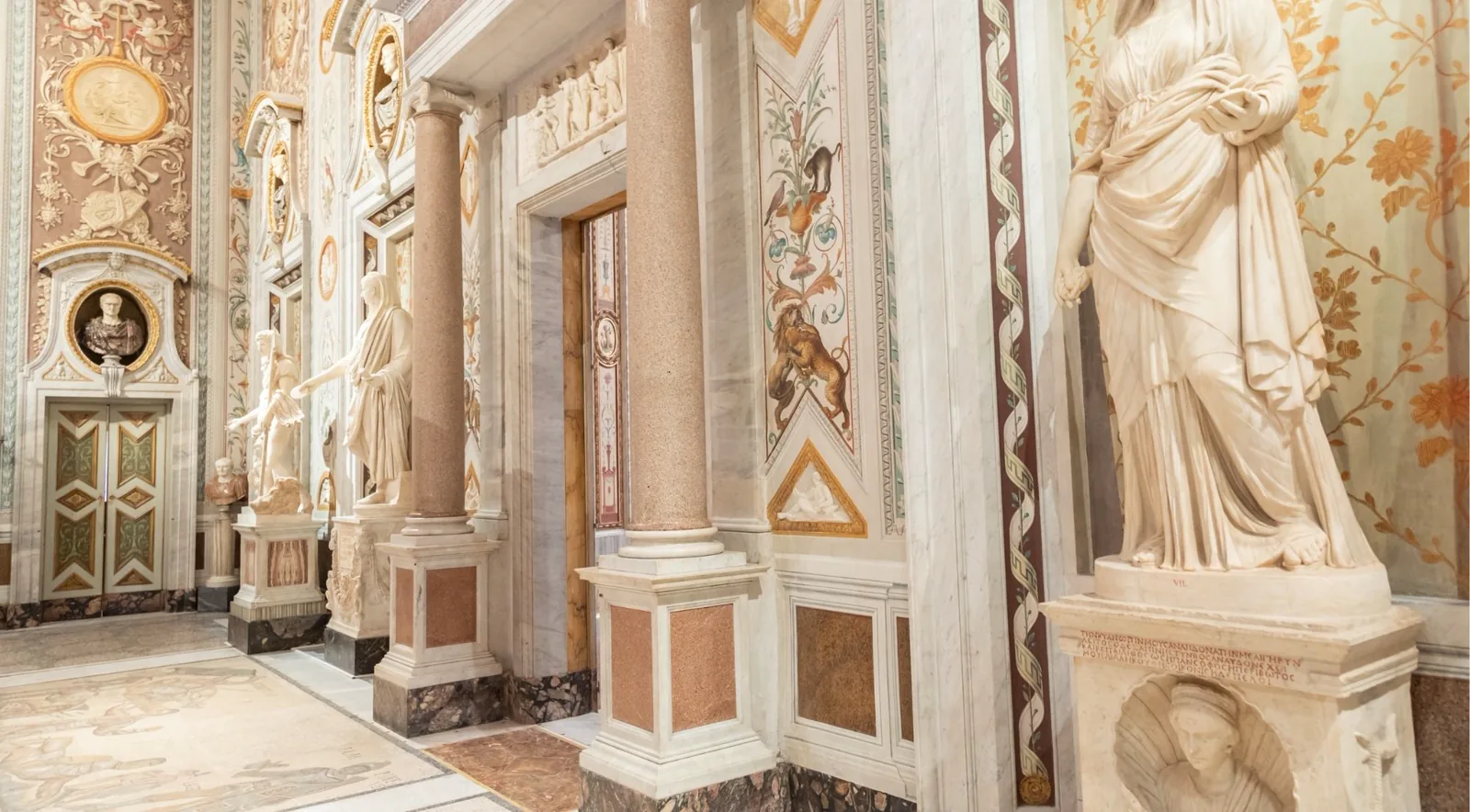
No other place in the world brings together four great narrative early sculptures by Bernini in their original context. Here, room by room, you can follow the artist's evolution from the late-Mannerist residue of Aeneas to the full Baroque maturity of Apollo and Daphne: it's the birth of the Baroque, observed "live." The sculptures were conceived as "figures of imagination" to animate the space of each room, in dialogue with the ancient marbles and the ceiling decorations. Many were designed for a precise viewpoint and a narrative crescendo — which is why it's worth walking around each group to discover its multiple perspectives.
How to see them: visit and tickets
The Borghese Gallery is located at Piazzale Scipione Borghese 5, inside Villa Borghese. Booking is mandatory for every ticket type (including free ones): without a booking, entry isn't guaranteed. The visit is organized in two-hour slots of up to about 180 people, which often sell out weeks in advance. The museum is open Tuesday–Sunday, 9 AM–7 PM (closed Mondays). Prices and hours may vary, especially during temporary exhibitions.
For full details on rates, time slots, and how to secure a spot, see our Borghese Gallery ticket guide; for the villa's history and other collections, our complete museum guide. If you'd rather explore at your own pace, the audio-guide ticket also covers Bernini's marbles room by room.
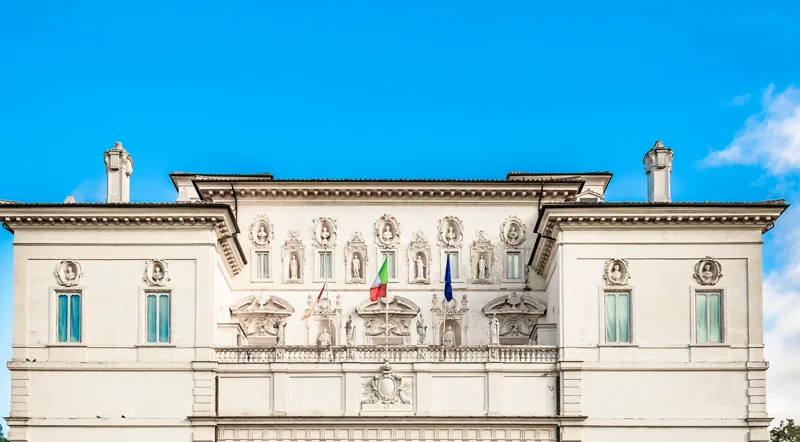
Skip-the-line ticket with audio guide
Priority entry with a guaranteed time slot and a digital audio guide narrating Bernini, Caravaggio, Canova, and Raphael room by room. Rated 4.6 from 2,700+ reviews.
Frequently asked questions
Answers to the most common questions about Bernini's works and the visit.
How many Bernini works are at the Borghese Gallery?
The four major early sculptural groups — Aeneas and Anchises, The Rape of Proserpina, Apollo and Daphne, and David — plus the two busts of Cardinal Scipione Borghese, the bust of Paul V, Truth Unveiled by Time, the Amalthea Goat (attribution debated), and three paintings (two self-portraits and a Portrait of a Boy).
What's the most famous work?
Apollo and Daphne (1622–1625), in Room III, considered the absolute pinnacle of Baroque sculpture: Bernini fixes in marble the exact instant the nymph Daphne transforms into a laurel tree.
Which rooms hold Bernini's sculptures?
On the ground floor: David in Room II, Apollo and Daphne in Room III, The Rape of Proserpina in Room IV (Room of the Emperors), and Aeneas and Anchises in Room VI. Cardinal Scipione's busts and the self-portraits are on the upper floor.
Why does David have such a tense expression?
According to sources, it's a self-portrait of Bernini: Cardinal Maffeo Barberini held a mirror for him while the artist studied his own expression mid-effort, capturing the instant before the stone is thrown at Goliath.
Do you need to book to see Bernini's works?
Yes, it's mandatory for everyone, even for free tickets, and entry is by two-hour time slots with capacity limited to about 180 people. Slots often sell out weeks ahead: see our ticket guide to book.