Rome's museums fall into four families — state, civic, Vatican and private — and each has its own ticket, its own free day and its own booking channel. Only the Borghese Gallery and the Colosseum impose compulsory booking; at the Vatican Museums it isn't formally required, but without it you queue for hours. The first Sunday of the month is free at state and civic museums, the last Sunday at the Vatican. Realistically you will see two museums a day: one large, one medium.
The four families of Roman museums
Working out which family a museum belongs to tells you in advance what it costs, whether you need to book, and when you can get in free.
| Family | Who runs them | Examples | Main free entry |
|---|---|---|---|
| State | Ministry of Culture | Borghese Gallery, Palazzo Barberini, Museo Nazionale Romano, Castel Sant'Angelo, Villa Giulia, GNAM, MAXXI | First Sunday of the month |
| Civic | City of Rome | Capitoline Museums, Centrale Montemartini, Ara Pacis, Trajan's Markets, Palazzo Braschi | Rome residents (from 2026) + first Sunday |
| Vatican | Vatican City State | Vatican Museums and Sistine Chapel | Last Sunday of the month |
| Private | Families and foundations | Galleria Doria Pamphilj, Galleria Colonna | None |
Why it matters. The MIC Card, which gives unlimited museum access for five euros a year, covers only the civic museums and is reserved for people who live or study in Rome. The free first Sunday applies to state museums (and in Rome to civic ones too), but not to the Vatican, which has its own free day on the last Sunday. And the Roma Pass does not include the Vatican.
From 2 February 2026 the City of Rome reformed civic museum pricing: free entry for residents of Rome and the Metropolitan City, on production of ID at the ticket office. For non-residents, five previously free museums became ticketed (Museo Barracco, Museo Carlo Bilotti, Museo Pietro Canonica, Museo Napoleonico, Villa di Massenzio) with a 7.50 euro ticket (6 euros reduced). The Trevi Fountain also falls under the new model, with two euros for non-residents. Anyone arriving from outside Rome, then, does not benefit from the free entry — and at some sites now pays where they previously did not.
Other experiences in Rome worth adding
The rest of an itinerary is almost always built around the big museums: from the Vatican Museums and the Sistine Chapel to the Colosseum and the Roman Forum, from the Capitoline Museums on the Campidoglio to the Borghese Gallery inside the Villa Borghese park. Many visitors add a guided walk through the Baroque centre taking in Piazza Navona, the Pantheon and the Trevi Fountain, or an itinerary devoted to Caravaggio in the churches of the Tridente.
The museums not to miss
Vatican Museums and Sistine Chapel
The most visited museum in Europe after the Louvre: 6,825,436 visitors in 2024 according to The Art Newspaper's ranking. Seven kilometres of galleries culminating in the Sistine Chapel, with Michelangelo's ceiling and Last Judgement, after the Raphael Rooms, the Laocoön and the Apollo Belvedere.
Booking is not formally compulsory, but in practice it is: without it you join a queue that can last hours. A ticket booked online carries a fixed surcharge over one bought on the spot — it is worth every cent. Closed on Sundays, except the last of the month, when entry is free from 9am to 2pm: free, but among the most crowded days of the year.
Budget for it: at least three hours, shoulders and knees covered, and no possibility of visiting the Sistine Chapel on its own.
Our pick on GetYourGuide: skip-the-line ticket for the Vatican Museums and Sistine Chapel — rated 4.5 from over 155,000 reviews, the highest volume of any museum ticket in Rome.
Borghese Gallery
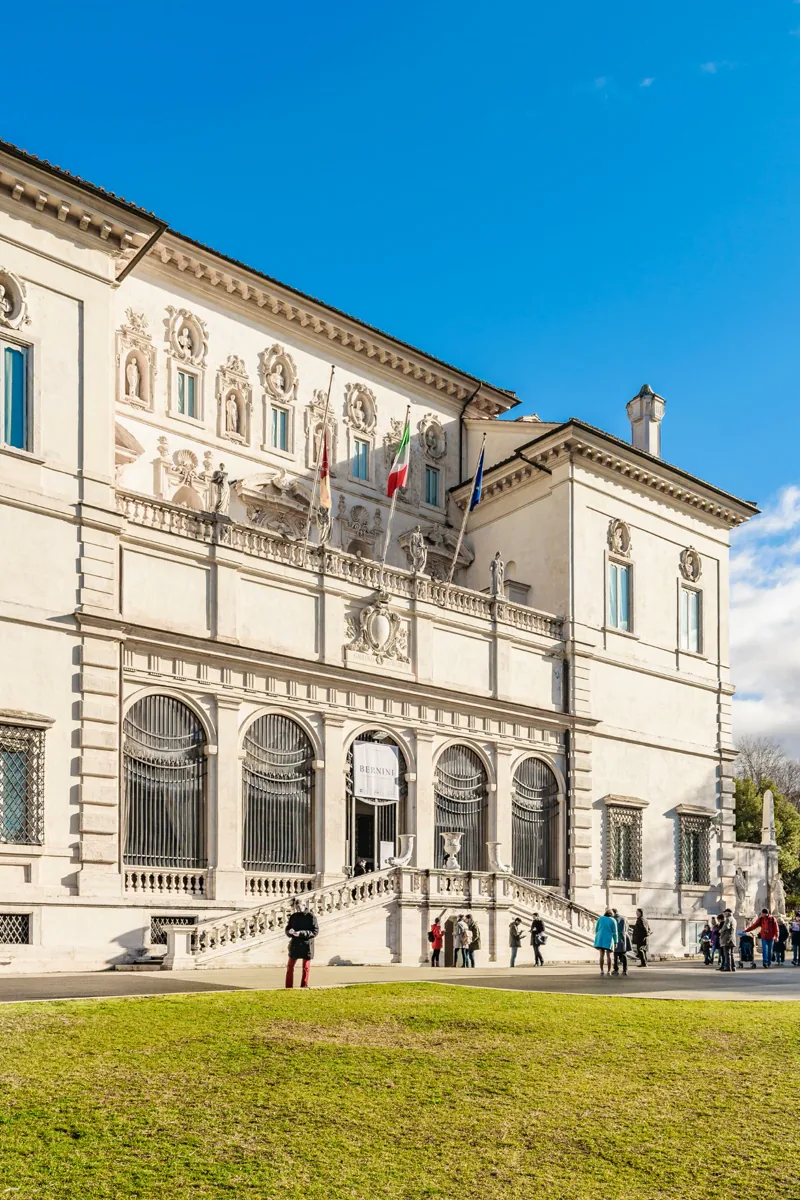
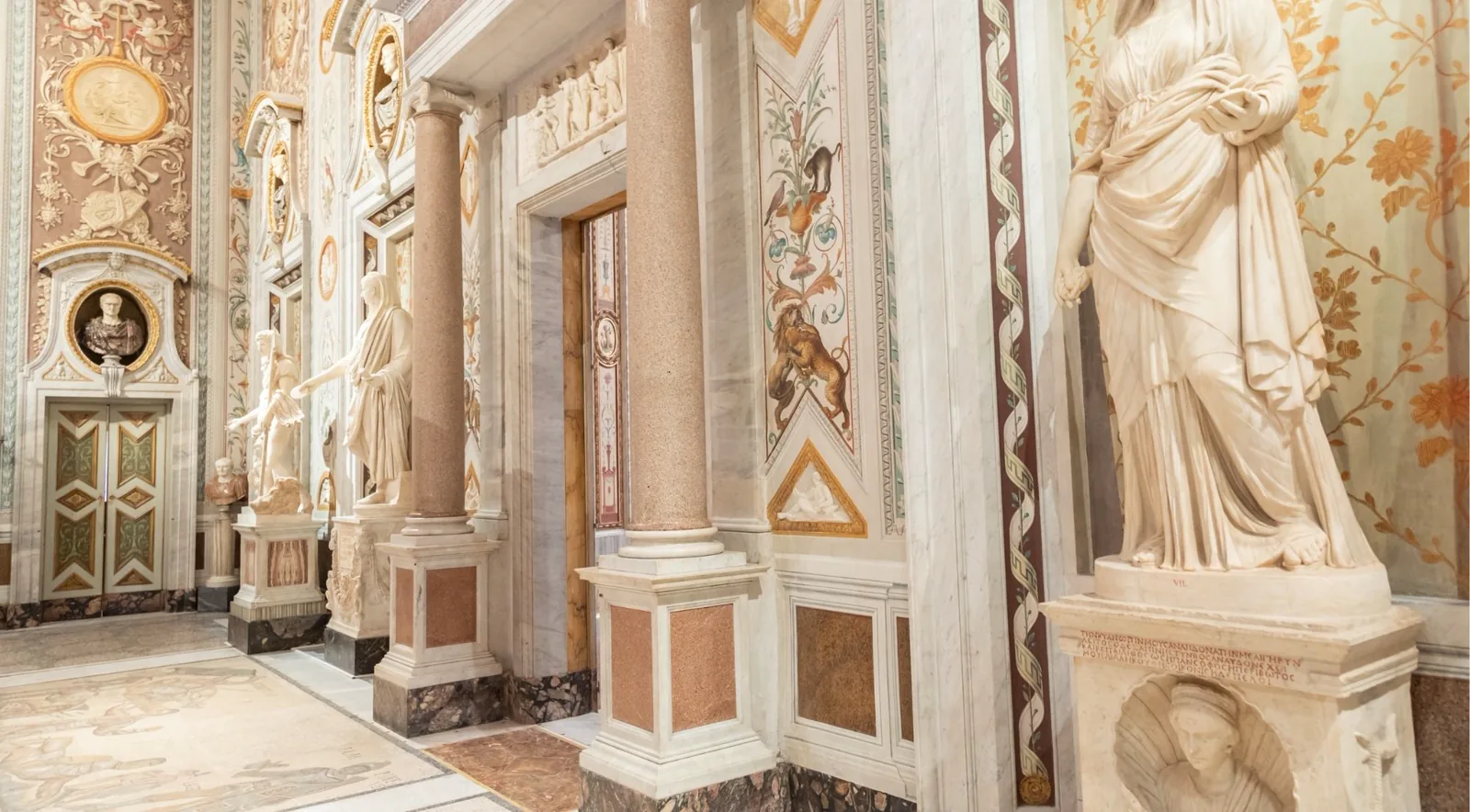
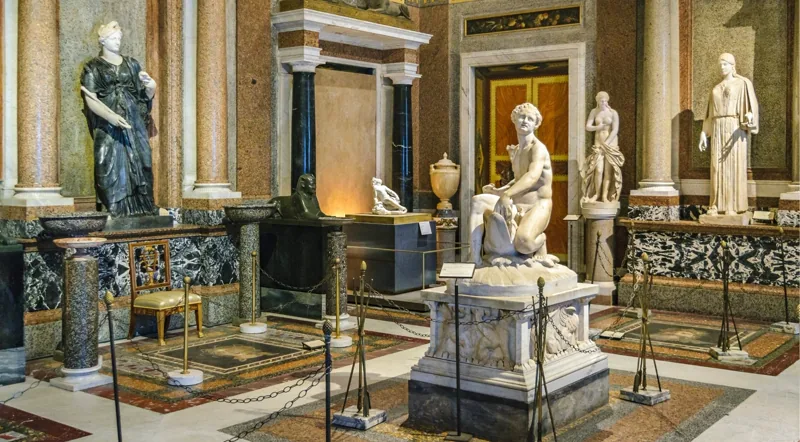
The most tightly regulated museum in Rome, and for many the finest. Twenty rooms hold four sculptures by Bernini (Apollo and Daphne, The Rape of Proserpina, David, Aeneas and Anchises), six paintings by Caravaggio, Canova's Pauline Bonaparte, Raphael's Deposition and Titian's Sacred and Profane Love.
Booking is compulsory for everyone, free entries included. Entry is in hourly slots of 180 people, the visit lasts two hours and leaving at the end of the slot is not optional. In 2025 the museum sold over 630,000 tickets: the best slots go weeks ahead, often before the Vatican Museums'.
Further reading: our complete guide to the museum and our guide to tickets and booking.
Small-group guided tour with skip-the-line entry
The format that gets the most out of a two-hour slot: a licensed art historian takes the group straight to what counts — the Berninis, the Caravaggio room, Canova's Pauline — without you losing time working out where things are. Rated 4.7 from 2,700+ reviews.
Capitoline Museums
The oldest public museum in the world: founded in 1471, when Sixtus IV gave a group of ancient bronzes to the people of Rome. They stand on the Campidoglio, in the square designed by Michelangelo, and occupy two palaces linked by the Tabularium, the underground gallery that frames one of the best views over the Roman Forum.
Masterpieces: the Capitoline Wolf, the Dying Gaul, the original equestrian statue of Marcus Aurelius, Cupid and Psyche, and a picture gallery with two Caravaggios. In 2024 they recorded 732,507 visitors, a record, according to the City of Rome's Statistical Yearbook. Booking is advisable but not compulsory. Free for residents from 2026. On GetYourGuide we did not find a Capitoline ticket worth flagging — the few listings available have a handful of reviews or low ratings, so the official ticket office is the better route.
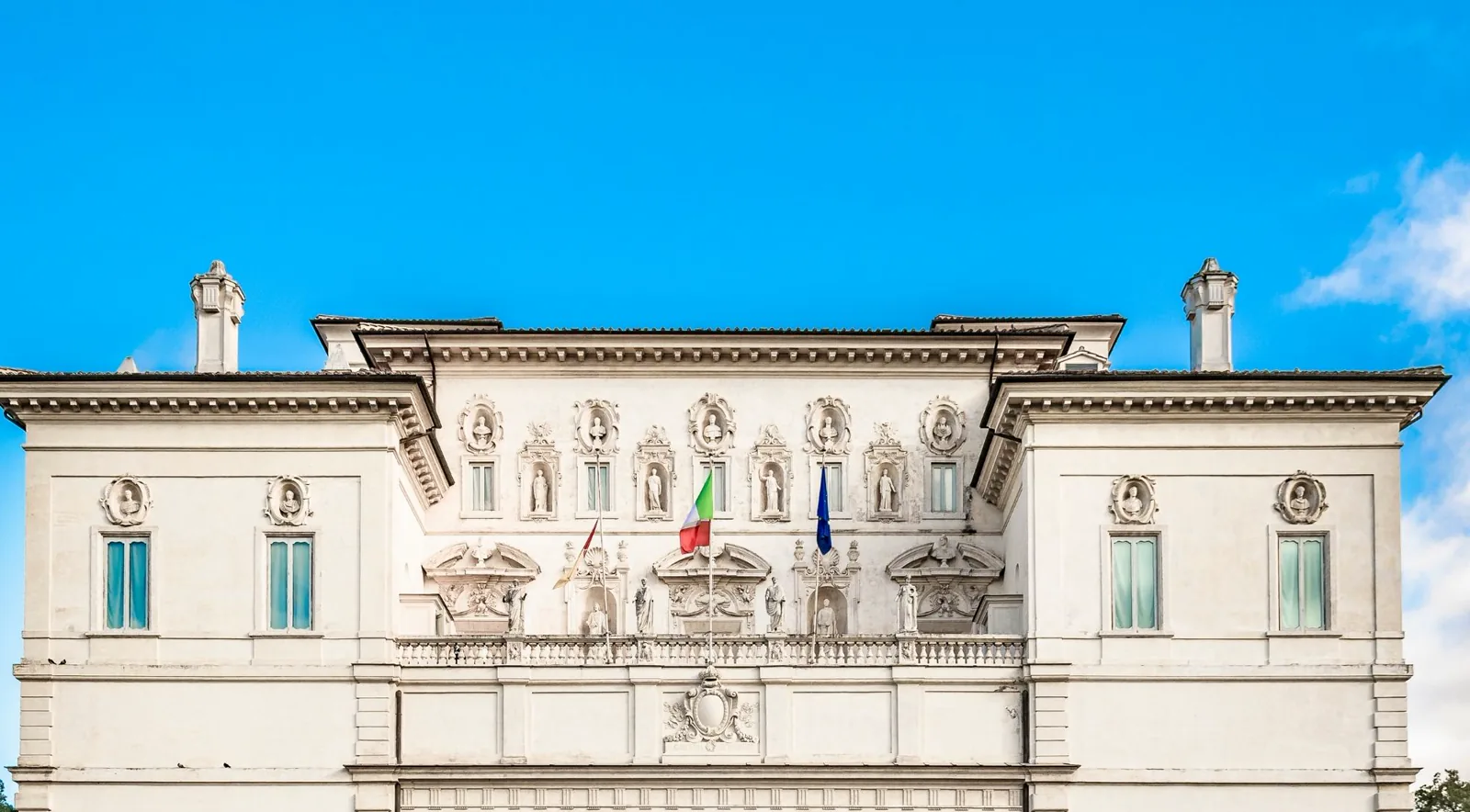
Museo Nazionale Romano
Four sites, one combined ticket valid for several days: probably the best value in Rome.
- Palazzo Massimo alle Terme — the frescoes from the Villa of Livia, the mosaics, the great statuary. The site to see if you pick only one.
- Palazzo Altemps — the Ludovisi collection, in a Renaissance palace beside Piazza Navona.
- Baths of Diocletian — the imperial baths and the epigraphic museum.
- Crypta Balbi — urban archaeology, from antiquity to the Middle Ages.
Under-visited relative to its quality. Check the opening of individual sites first, as they occasionally close for works.
Palazzo Barberini — Gallerie Nazionali d'Arte Antica
A Baroque palace containing an extraordinary collection: Raphael's La Fornarina, Caravaggio's Judith Beheading Holofernes, Holbein's Henry VIII, Filippo Lippi's Annunciation, and the ceiling frescoed by Pietro da Cortona.
The building is a masterpiece too: it holds both Bernini's square staircase and Borromini's helical one — the two rivals, in the same palace. The ticket is combined with the Galleria Corsini in Trastevere.
Galleria Doria Pamphilj
Rome's most important private collection, still in the family palace on Via del Corso. The centrepiece is Velázquez's portrait of Innocent X — the one the pope judged "too true" — displayed beside Bernini's bust of the same pontiff. Plus three Caravaggios, a Raphael, a Titian and the Hall of Mirrors.
The audioguide is included and narrated by a member of the family: it is one of the most distinctive museum experiences in the city. Check the midweek closing day, on which sources disagree.
Castel Sant'Angelo
Hadrian's mausoleum, later a fortress, a prison and a papal refuge. You climb the Roman helical ramp to the frescoed Renaissance rooms and the panoramic terrace, one of the best in Rome. The ticket includes access to other museum sites within a few days.
Our pick on GetYourGuide: entry ticket with digital audioguide — rated 4.6 from over 8,400 reviews.
Centrale Montemartini
The most surprising museum in the city: classical statues displayed inside a decommissioned power station, among turbines, boilers and diesel engines. Conceived as a temporary arrangement in 1997, it became a permanent site and the second branch of the Capitoline Museums.
The juxtaposition of ancient marble and industrial machinery works beautifully, and the museum is almost always empty. Ostiense district, metro B.
Museo Nazionale Etrusco di Villa Giulia
The most important Etruscan collection in the world, in the sixteenth-century villa of Pope Julius III. This is where you find the Sarcophagus of the Spouses and the Apollo of Veii. State-run, uncrowded, a short walk from Villa Borghese.
Galleria Nazionale d'Arte Moderna e Contemporanea
Nineteenth- and twentieth-century Italian art — Canova, De Chirico, Modigliani — with international incursions (Klimt, Van Gogh, Pollock). In the Flaminio district, on the edge of Villa Borghese.
MAXXI
The national museum of twenty-first-century arts, in a building designed by Zaha Hadid: worth the visit for the architecture alone. State-run, so it falls under the free first Sunday, not under free entry for residents.
Two small museums almost nobody visits
- Galleria Spada — an intact Baroque picture collection and, above all, Borromini's perspective: a colonnade that looks forty metres long and measures under ten, with a statue that appears life-size and stands little over half a metre. Note: the perspective is not accessible on free Sundays.
- Galleria Colonna — open only a very few days a week, it holds one of the most spectacular Baroque halls in Europe, with an 1849 cannonball still lodged in the grand staircase. Check days and hours, because they are very limited.
Careful: these are not museums
People searching for "museums in Rome" often also mean the Colosseum, the Roman Forum, the Palatine, the Domus Aurea, the Baths of Caracalla, the Catacombs or the Pantheon. These are archaeological sites and areas, with their own rules: the Colosseum requires compulsory timed booking, the Domus Aurea can only be visited on a guided tour, and the Pantheon has charged admission since 2023.
In 2024 the Colosseum Archaeological Park recorded 14,733,395 visitors, the most visited cultural site in Italy — more than three times the second-placed site (Ministry of Culture data, Sistan analysis).
Our pick on GetYourGuide: Colosseum, Roman Forum and Palatine with entry and audioguide — rated 4.4 from over 13,800 reviews. Like the Borghese Gallery, the Colosseum only admits you in a booked time slot.
Do you need to book? The levels of booking
| Level | Museums | What to do |
|---|---|---|
| Compulsory | Borghese Gallery, Colosseum | Book weeks ahead |
| Effectively necessary | Vatican Museums | Book online, always |
| Advisable | Capitoline, Castel Sant'Angelo, Palazzo Barberini, Doria Pamphilj | Useful at weekends and in high season |
| Not necessary | Centrale Montemartini, Villa Giulia, Galleria Spada, GNAM, MAXXI | You can just walk in |
The difference is substantial: at the Borghese Gallery, no booking means no entry, full stop. At the Vatican Museums you always get in, but the price is the queue.
If the Borghese Gallery is the tightest constraint in your itinerary, the format combining museum and gardens solves the booking and the surrounding park in one go.
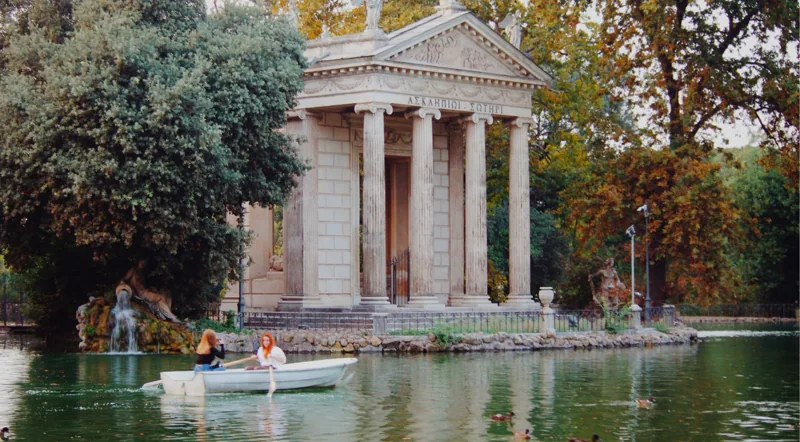
Borghese Gallery and gardens: small-group guided tour
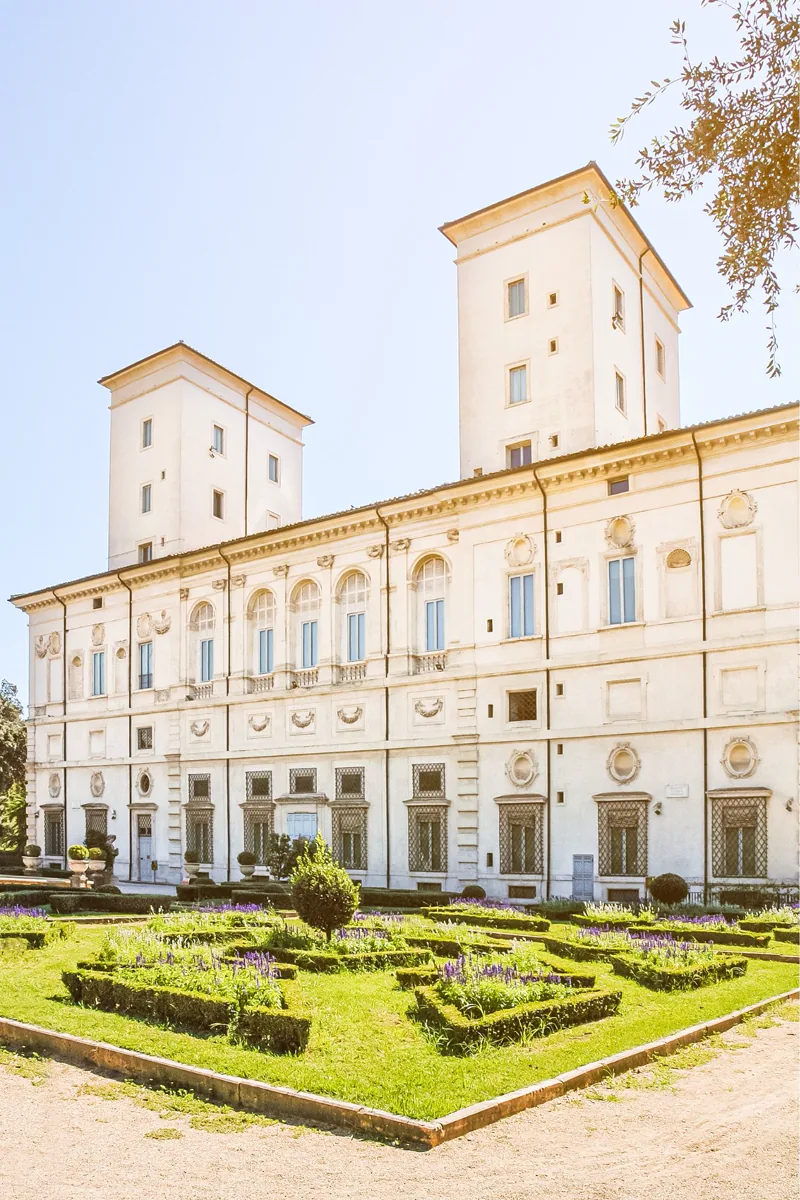
Two and a half hours covering the villa's gardens and the museum's twenty rooms: the way to make a whole half-day work in the Villa Borghese quarter, rather than just the two-hour visit. Rated 4.7 from 2,800+ reviews.
Free entry and how to save
- First Sunday of the month — free entry at state museums (in Rome at civic ones too). Confirmed for 2026. Note: at the Borghese Gallery booking remains compulsory and carries a fee, with tickets released ten days ahead and gone within hours.
- Last Sunday of the month — free at the Vatican Museums, 9am to 2pm, no booking. Very crowded.
- Free entry for Rome residents — from February 2026, at civic museums. It does not apply to state museums or the Vatican.
- MIC Card — five euros a year for unlimited entry to civic museums, but only for people resident, domiciled or studying in Rome and the Metropolitan City.
- Roma Pass — in 48- and 72-hour versions, includes unlimited public transport plus one or two free entries and reductions on others. It does not include the Vatican Museums. It is worth it only if you use transport heavily and visit at least two or three paid sites; for anyone walking everywhere and mainly aiming at the Vatican, it rarely pays for itself. Note: even with the pass, the Colosseum and the Borghese Gallery still have to be booked.
- Always free — under-18s at state museums; reduced rate for EU citizens aged 18 to 25.
- National free days — 25 April, 2 June, 4 November.
How to plan your visit
How many museums a day
Fewer than you would like. A "large" museum — Vatican, Capitoline, Museo Nazionale Romano — takes half a day and leaves you tired. Two museums a day is the sensible maximum, one large and one medium.
- One day: a single large museum (Vatican or Borghese Gallery) plus a walk among the open-air sites.
- Two days: Vatican Museums + Borghese Gallery or Capitoline.
- Three days: add the Museo Nazionale Romano or the Doria Pamphilj, plus the Colosseum and the Forum.
- Four or more: time for the "alternative" museums — Montemartini, Villa Giulia, Palazzo Barberini, Spada.
Group by area
- Villa Borghese and Flaminio: Borghese Gallery, Museo Bilotti, Museo Canonica, Villa Giulia, GNAM, MAXXI — all walkable through the park.
- Campidoglio and the Fora: Capitoline Museums, Trajan's Markets, Colosseum, Roman Forum.
- Vatican: Vatican Museums, St Peter's Basilica, Castel Sant'Angelo.
- Termini: Palazzo Massimo and the Baths of Diocletian, facing each other.
- Historic centre: Doria Pamphilj, Palazzo Altemps, Galleria Spada, Galleria Colonna, Ara Pacis.
- Ostiense: Centrale Montemartini.
The Villa Borghese quarter is the easiest to cover on foot: six museums in one park, and from there it is a ten-minute walk down to Piazza del Popolo, where the basilica holds two Caravaggios you can see for free.
Closing days
The general rule is that many museums close on Mondays — Borghese Gallery, Capitoline, Palazzo Barberini, Museo Nazionale Romano, Villa Giulia, GNAM, MAXXI. But there are exceptions worth knowing:
- the Vatican Museums close on Sundays (except the last of the month);
- the Galleria Spada closes on Tuesdays;
- Castel Sant'Angelo also opens on the first Monday of the month;
- the Galleria Colonna opens only a few days a week.
Almost everywhere closes on 25 December and 1 January.
Final tips
- With children: Villa Giulia (the Etruscans always work), Centrale Montemartini (the machines), Castel Sant'Angelo (the fortress).
- If it rains: the big covered complexes — Vatican, Capitoline, Museo Nazionale Romano.
- If you want quiet: Centrale Montemartini, Villa Giulia, Palazzo Barberini, Palazzo Altemps, Galleria Spada. These are the museums where the experience is best, simply because nobody goes.
- When to go: the least crowded months are mid-November to March, holidays excepted. In any season, the earliest morning slots are the quietest. Avoid the first Sunday of the month if you want calm, and the last Sunday at the Vatican.
Book the Borghese Gallery
Of all Rome's museums, this is the one that needs the most notice: 180 places per slot and tickets that vanish weeks ahead. If it is in your plans, lock it in first and build the rest of the itinerary around that time. For a comparison of the formats — plain ticket, audioguide, small group, private — see our guide to guided tours.
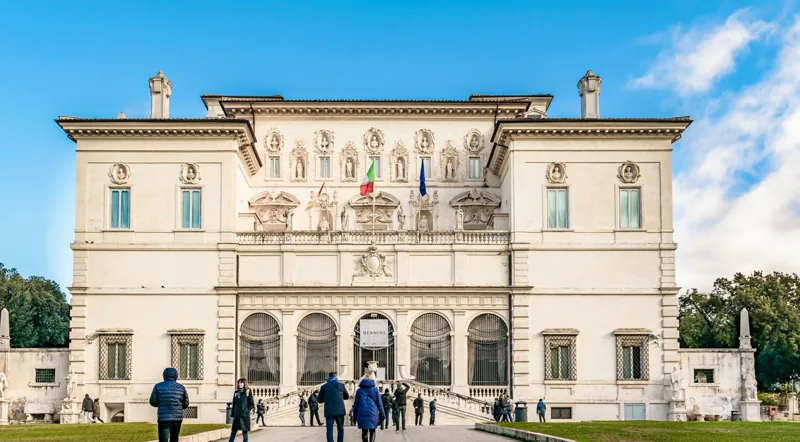
Skip-the-line ticket with audioguide
The basic option for locking in a slot: entry at your booked time and an audioguide so you go at your own pace, with no guide in tow. The right choice if the Borghese is one of three or four museums on the list and time is tight. Rated 4.6 from 2,700+ reviews.
Frequently asked questions
Answers to the questions that come up most about museums, tickets and free entry in Rome.
Which are the most important museums in Rome?
The Vatican Museums with the Sistine Chapel, the Borghese Gallery, the Capitoline Museums and the Museo Nazionale Romano. After those, Palazzo Barberini, the Galleria Doria Pamphilj and Castel Sant'Angelo.
Which is the most visited museum in Rome?
Among museums, the Vatican Museums, with almost seven million visitors in 2024. If archaeological sites are counted too, the outright record belongs to the Colosseum Archaeological Park, with over fourteen million visitors in the same year.
Which museums in Rome require compulsory booking?
The Borghese Gallery and the Colosseum. At the Vatican Museums booking is not formally compulsory but is in practice essential if you want to avoid very long queues. For the Borghese, see our tickets guide.
When are museums free in Rome?
The first Sunday of every month at state and civic museums, the last Sunday of the month at the Vatican Museums, and on 25 April, 2 June and 4 November. Since 2026 civic museums are also free for residents of Rome.
Is the Roma Pass worth it?
It depends how you use it. It includes unlimited public transport and one or two free entries, so it pays off if you move around a lot and visit at least two or three paid sites. It does not include the Vatican Museums, and for the Colosseum and the Borghese Gallery booking is still compulsory.
How many museums can you visit in a day?
Realistically two: one large and one smaller. The major complexes such as the Vatican Museums, the Capitoline or the Museo Nazionale Romano take up half a day on their own.
What is the difference between state and civic museums?
State museums answer to the Ministry of Culture, civic ones to the City of Rome. The distinction determines prices, free entry and passes: the MIC Card and free entry for residents apply only to civic museums, while the free first Sunday covers both.
Which museums in Rome close on Mondays?
Most state and civic museums, including the Borghese Gallery, the Capitoline, Palazzo Barberini and the Museo Nazionale Romano. The Vatican Museums are the exception: they open on Mondays and close on Sundays.
Which is the best museum in Rome if I'm short on time?
For density of masterpieces relative to the time needed, the Borghese Gallery: two hours, twenty rooms, and the highest concentration of Bernini and Caravaggio anywhere. But it has to be booked well ahead.
Are there free museums in Rome?
Yes. Some smaller civic museums remain free for everyone, and many Roman churches hold outright masterpieces — from Caravaggio to Bernini — with no ticket at all.