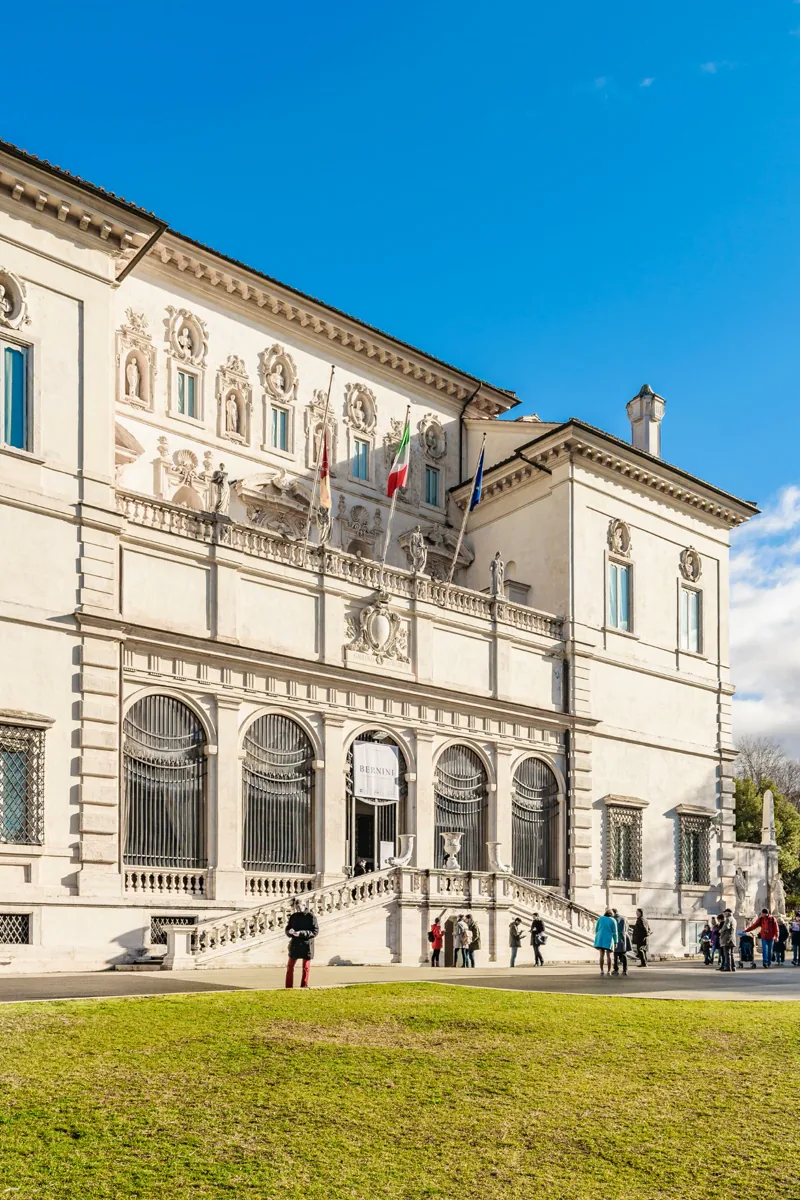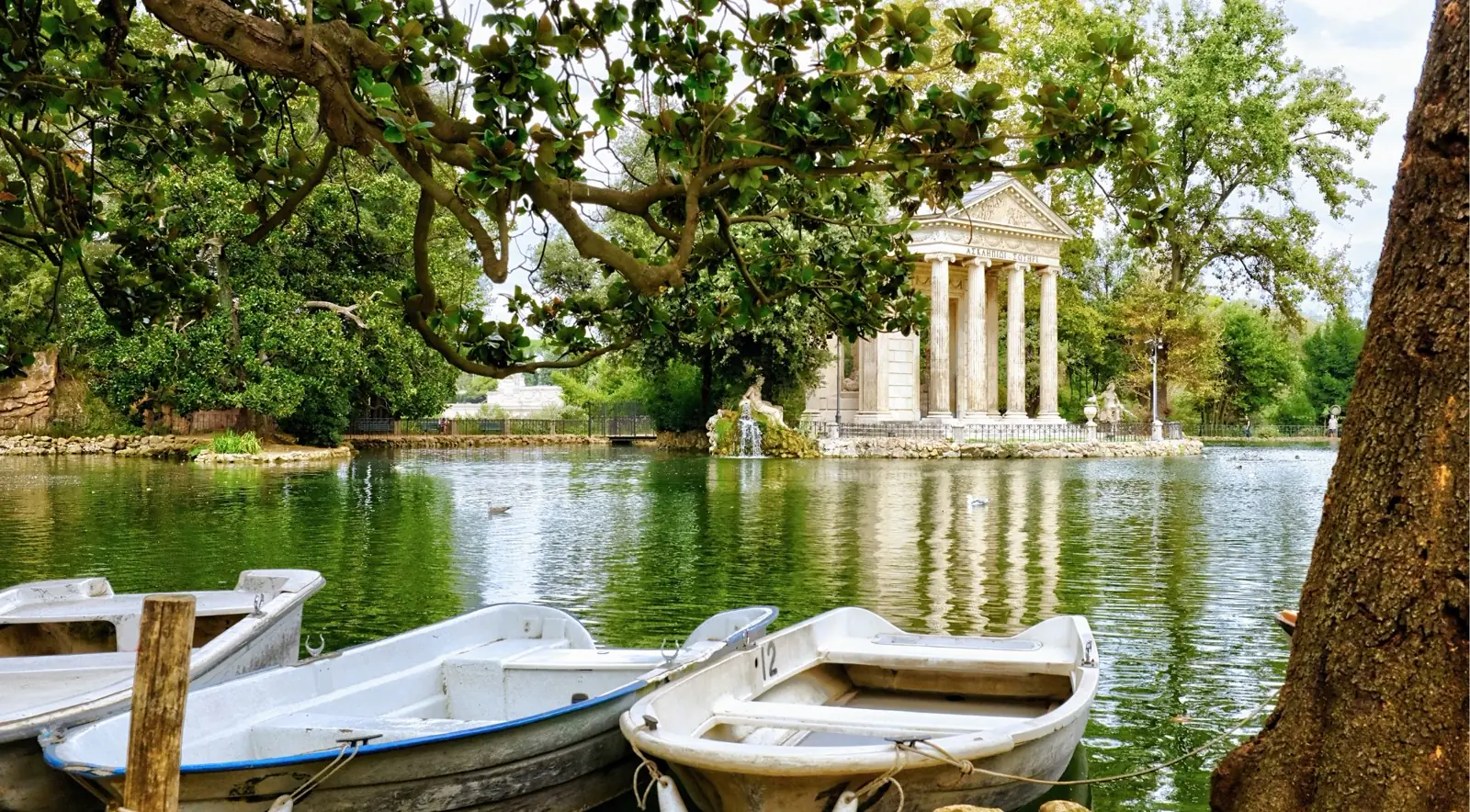
Villa Borghese is Rome's great public park in the heart of the city (roughly 80 hectares): entry to the park is free, while the museums inside it — starting with the Borghese Gallery — are paid and often require mandatory booking. Don't miss: the Pincio Terrace, the water clock, the small lake with the Temple of Asclepius, Piazza di Siena, the Bioparco, and the museums. It's easy to reach by metro Line A (Flaminio or Spagna), tram, and bus.
What is Villa Borghese
Villa Borghese is one of Rome's most loved and visited urban parks: roughly 80 hectares of green space in the heart of the city, between Piazza del Popolo, Via Veneto, and the Pinciano district. It brings together Italian and English-style gardens, groves, small lakes, fountains, statues, historic buildings, and an extraordinary concentration of museums — earning it the nickname "Park of Museums."
Born as the private garden of Cardinal Scipione Borghese in the early 1600s, the park was purchased by the Italian state in 1901 and handed over to the City of Rome in 1903, which opened it to the public. Since then, Villa Borghese has been Romans' "green living room": a place to stroll, jog, cycle, row on the lake, bring the kids, and visit world-class art collections.
Careful not to confuse Villa Borghese (the park) with the Borghese Gallery (the museum). More on that in the dedicated section below: in short, the park has free open access, while the Borghese Gallery is a state museum requiring a ticket and mandatory booking.
Worth adding to your itinerary
A walk through Villa Borghese easily turns into a full day of art. The most natural addition is the Borghese Gallery, the museum at the heart of the park, perhaps with a guided tour that also covers the Villa Borghese gardens. Anyone staying longer in Rome often pairs the neighborhood with the Pincio terrace and Piazza del Popolo, tours on Bernini and Caravaggio, the Bioparco with the kids, and classics like the Vatican Museums and Villa Giulia.
History and design of the park
The oldest core of Villa Borghese, a modest plot planted with vines, had belonged to the Borghese family since 1580. In the early 1600s, Cardinal Scipione Caffarelli Borghese (1576–1633), Pope Paul V's favorite nephew, began acquiring neighboring vineyards and land with the intent of creating a "villa of delights," the largest garden built in Rome since antiquity.
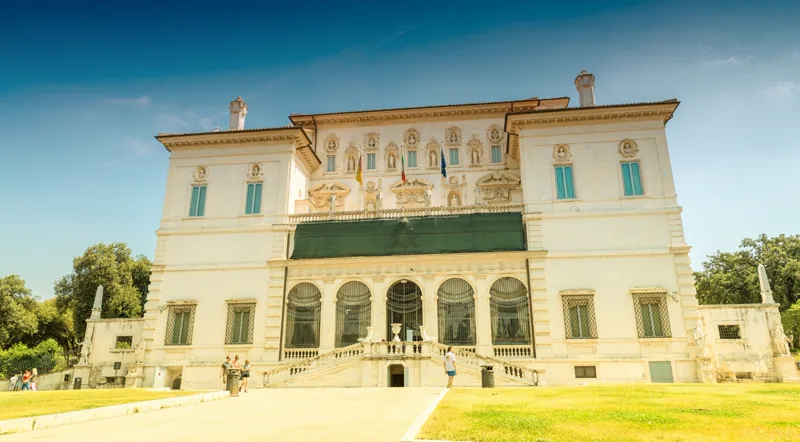
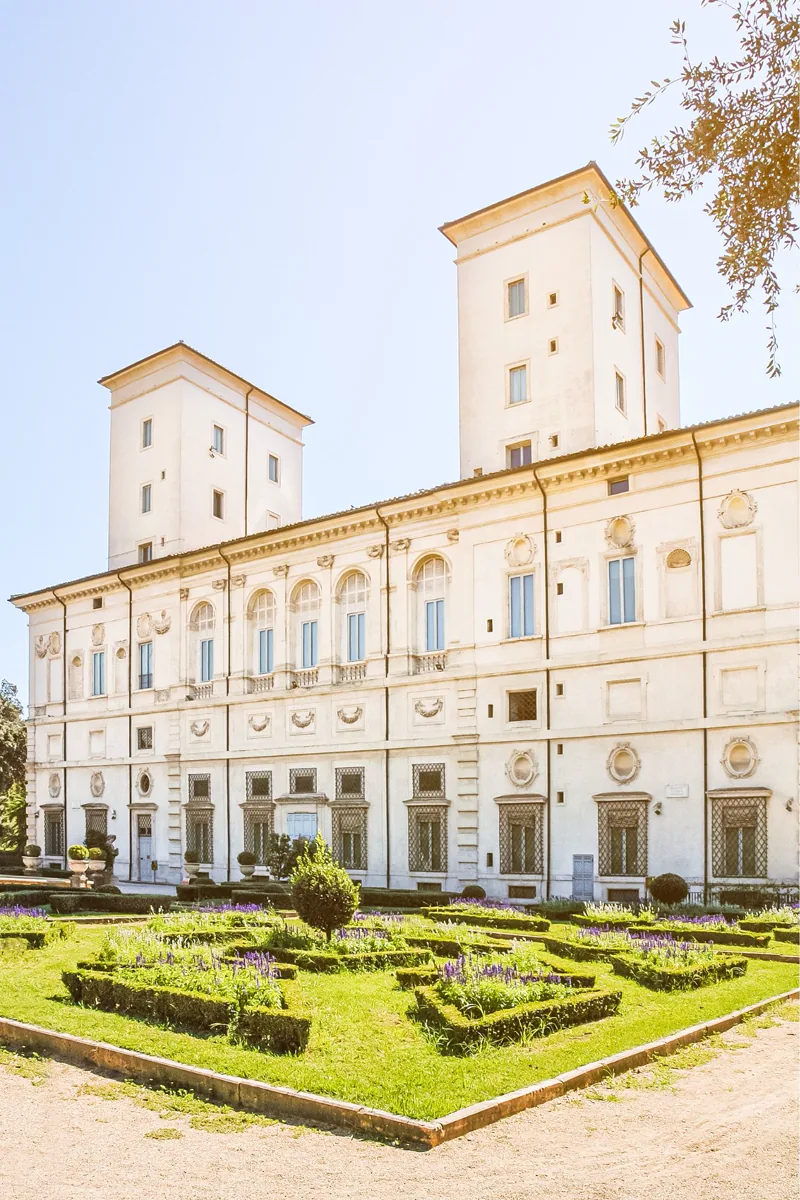
From 1606 the cardinal entrusted the villa's construction to the architects Flaminio Ponzio and, after his death, the Flemish Giovanni Vasanzio. By 1633 the villa was nearly complete: besides the Casino Nobile (today home to the Borghese Gallery) and the Uccelliera aviary, it included gardens adorned with fountains, ancient statues, and groves.
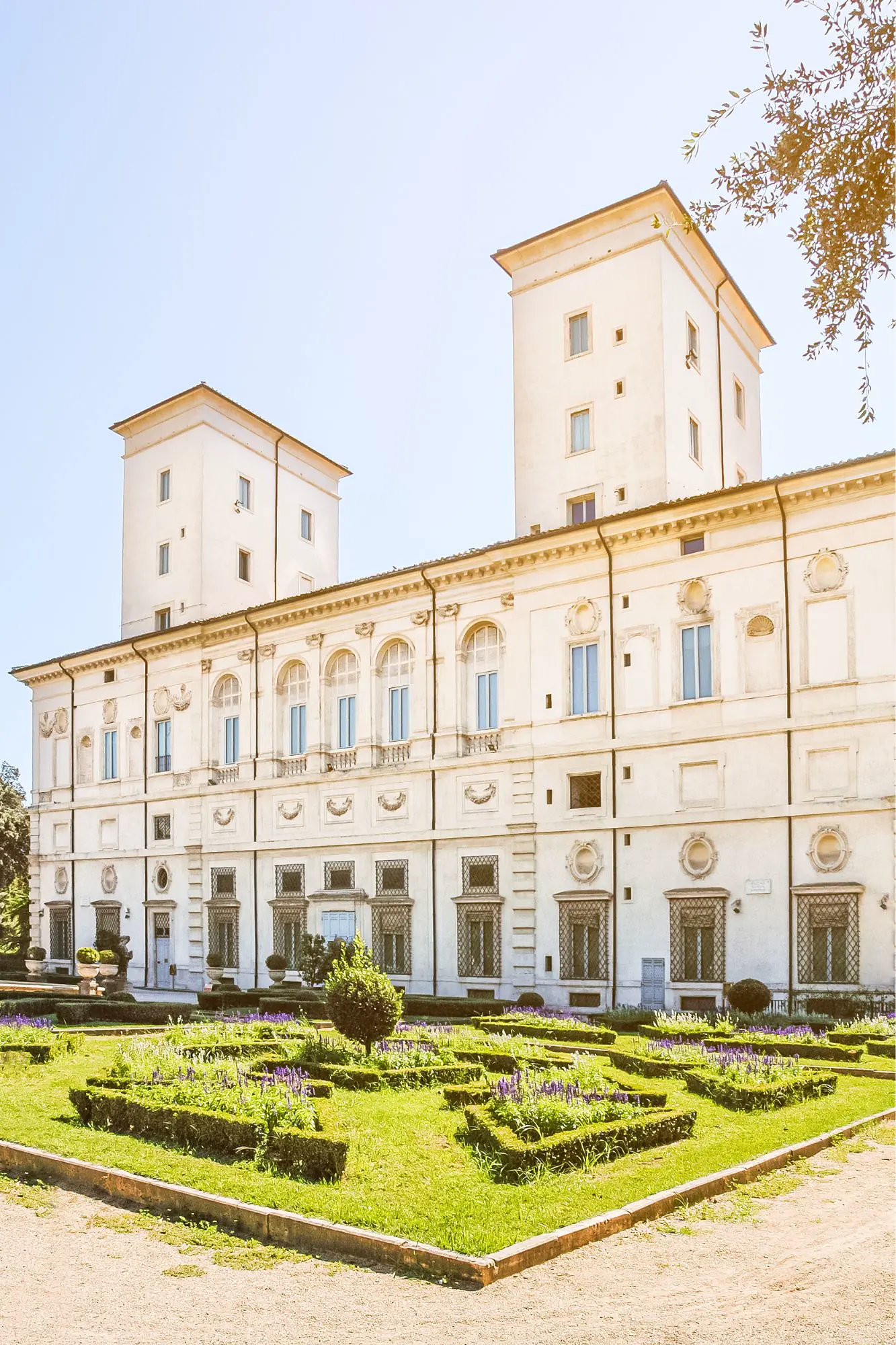
In the 18th century, Prince Marcantonio IV Borghese undertook substantial transformation works, entrusted to the architects Antonio and Mario Asprucci: the most significant intervention was the creation of the Giardino del Lago in English landscape style, along with Piazza di Siena and numerous "follies" and fountains. In the early 19th century, architect Luigi Canina gave the villa a new formal layout with neoclassical follies, including the Roman Arch and the Egyptian propylaea. In 1903 the park was handed over to the City of Rome and permanently opened to the public.
What to see at Villa Borghese
The park has no mandatory route: you can freely follow the avenues, discovering views and wonders at every turn. Here are the must-see stops.
The Pincio Terrace
From the Pincio Terrace (Piazzale Napoleone I) you get one of Rome's most celebrated views: it opens onto Piazza del Popolo and stretches to St. Peter's dome, the Janiculum, and Monte Mario. It's the perfect spot for sunset. Along the Pincio's avenues stand the famous busts of illustrious Italians — 229 herms depicting artists, writers, and scientists.
The water clock (hydrochronometer)
On Viale dell'Orologio, hidden among the vegetation, is one of the park's most curious treasures: the Pincio water clock, designed in 1867 by the Dominican friar Giovanni Battista Embriaco and installed in 1873 on a small island in the middle of a lake. It runs on water power alone and is the only hydrochronometer installed in a public garden in Italy.
The small lake and the Temple of Asclepius
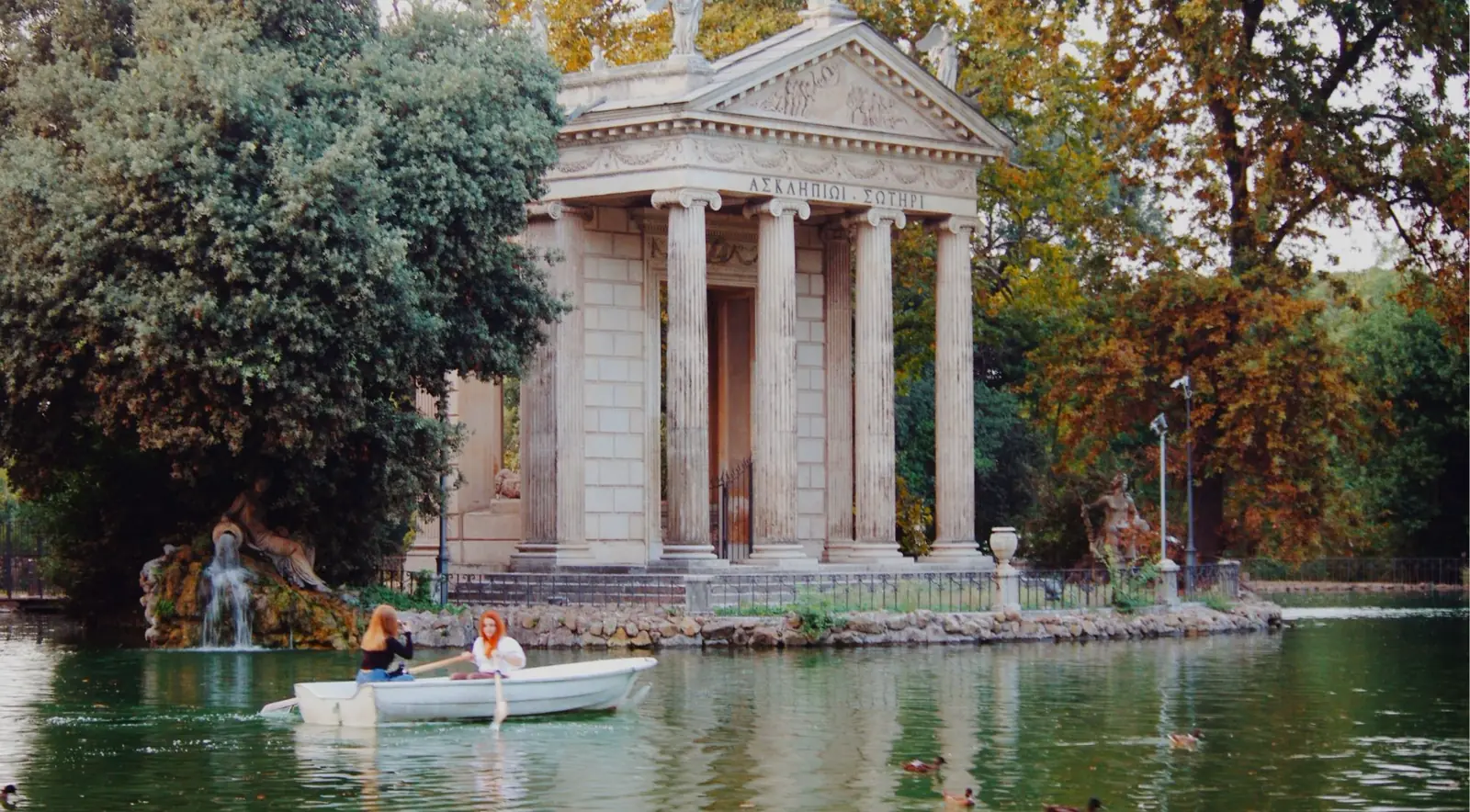
In the Giardino del Lago sits the romantic artificial lake, at whose center rises the neoclassical Temple of Asclepius, designed by Antonio Asprucci in the late 1700s. You can rent a rowboat for a loop around the temple: a classic for couples and families, at a very accessible price (roughly €3 per person for 20 minutes — verify current rates on-site).
The lake by boat
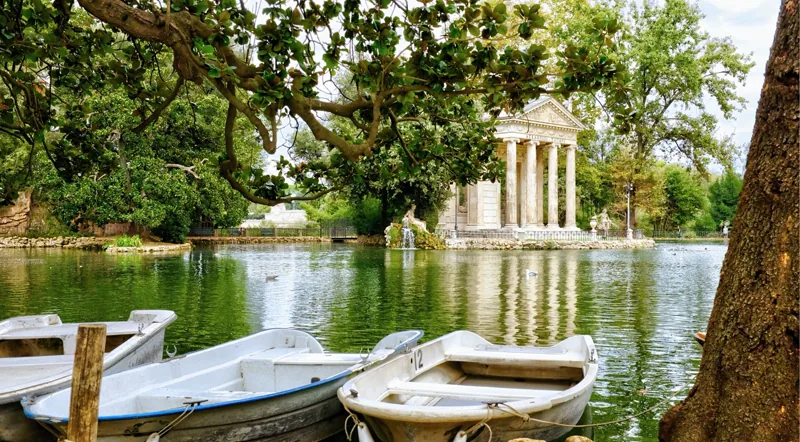
Villa Borghese: rowing boat tour of the lake with photo shoot
A rowboat loop around the Temple of Asclepius, with a photographer shooting as you go. It is the product that matches the Giardino del Lago described above. Rated 4.7 from just 13 reviews: the score is high but the review base is still small, so it is worth reading the most recent comments first.
Piazza di Siena
Piazza di Siena is a large elliptical grassy amphitheater, ringed by centuries-old pines, inspired by Siena's Piazza del Campo, the family's hometown. It hosts the famous Rome International Horse Show (CSIO), along with concerts and performances.
The Bioparco (zoo)
Rome's Bioparco, opened in 1911, is one of Europe's oldest zoological gardens. It spans about 17 hectares and is home to roughly 1,100 animals of over 200 species. It's one of the top family destinations, with themed areas, a children's farm, and the "Bioparco Express" train. Admission is paid (roughly $18 for adults, $13 for kids 3–12 — verify on bioparco.it).
Book your Bioparco ticket
Bioparco di Roma: entry ticket
Entry to the zoological garden inside Villa Borghese, with its 17 hectares, themed areas, the Children’s Farm and the Bioparco Express train. Rated 4.6 from 1,600+ reviews.
Cinema, theater, and museums
- Casa del Cinema in the Casina delle Rose, with screenings, retrospectives, and a free open-air summer arena.
- Gigi Proietti Globe Theatre: a faithful replica of London's Elizabethan Globe, with a summer season dedicated mostly to Shakespeare.
- Cinema dei Piccoli: the world's smallest cinema, according to Guinness World Records.
- National Gallery of Modern Art (GNAM), the Etruscan Museum of Villa Giulia, the Carlo Bilotti Museum, and the Pietro Canonica Museum (the latter two free for the permanent collection).
Activities and families
Villa Borghese is perfect for families: bike, tandem, and rickshaw rental along Viale Goethe and near the Bioparco, rowboats at the small lake, the Casina di Raffaello (a city-run play center), plus a tourist train, carousels, ponies, and the San Carlino puppet theater. To cover more ground with a guide, an e-bike tour is the most popular way to explore the park.
Villa Borghese by e-bike
Villa Borghese e-bike tour (small group or private)
With a local guide, you ride through the park's avenues to the Pincio Terrace and its views over Piazza del Popolo. About 90% of the route is traffic-free. Rated 4.9 from 100+ reviews.
Enter from Piazzale Flaminio, climb to the Pincio, take in the view from the Pincio Terrace, see the water clock, walk to the small lake and Temple of Asclepius (maybe a boat ride), then exit toward Porta Pinciana/Via Veneto. For a visit that includes the museums, plan for half a day or a full day.
Where it is and how to get there
Villa Borghese sits in the northern part of Rome's historic center, straddling the Pinciano, Flaminio, Ludovisi/Via Veneto, and Valle Giulia districts. There's no single entrance: the perimeter is large, and the entrance you choose shapes the experience of your visit.
Main entrances
- Porta Pinciana (at the top of Via Veneto): the most convenient access from the hotel district.
- Piazzale Flaminio / Piazza del Popolo: through the monumental entrance or up the scenic Pincio ramps.
- Trinità dei Monti, from Piazza di Spagna, climbing up toward the Pincio.
- Valle Giulia / Viale delle Belle Arti (museum side) and entrances on Via Pinciana, Via Raimondi, and Via Aldrovandi.
By public transport
- Metro A: Flaminio stop (Piazza del Popolo/Pincio side) or Spagna (Trinità dei Monti side); Barberini too for the Via Veneto area.
- Tram: lines 2, 3, and 19 (stops at Piazzale Flaminio and near the museums/Bioparco).
- Bus: numerous lines run along or through the villa (61, 89, 160, 490, 495, 590, 910, and the internal electric line 116).
By car
The perimeter between Muro Torto, Via Veneto, and Flaminio is often congested. Paid parking is available, including the Saba Villa Borghese underground garage and the metered spaces at Piazzale Ferdowsi.
Hours and entry
Park entry is free. Villa Borghese has open access, but its gates open in the morning and close in the evening on a seasonal schedule (roughly, evening closing around 7 PM in winter, 9 PM in the shoulder seasons, and 10 PM in summer — hours subject to change). The attractions and museums inside (Borghese Gallery, Bioparco, GNAM, Villa Giulia) have their own tickets and hours: always check updated hours and rates on the official sites before visiting.
How much time to allow and when to go
Villa Borghese is huge: a full day isn't enough to see it all. Spring and fall are the ideal seasons; attendance is higher during weekend midday hours, so it's worth arriving early. If you want to combine your walk with a visit to the park's most important museum, the best way to fit both into a single morning is a guided tour that includes the gallery and gardens.
Gallery + Villa Borghese gardens in a single tour
Guided tour of the Borghese Gallery and gardens — 2.5 hours
The museum's rooms plus the park's 19th-century gardens, exiting onto the Pincio toward the Temple of Asclepius and the panoramic terrace. Ideal for a first visit. Rated 4.7 from 2,800+ reviews.
Villa Borghese or Borghese Gallery? The difference
It's the most frequent question, and the distinction is essential:
- Villa Borghese is the public park: you stroll freely, entry is free, and no booking is required.
- The Borghese Gallery is the state museum housed in the Casino Nobile inside the park. It holds masterpieces by Bernini (Apollo and Daphne, The Rape of Proserpina), Caravaggio, Raphael, Titian, and Canova (Pauline Borghese). Visiting requires a ticket with mandatory booking: access is capped, with fixed-capacity two-hour slots, and tickets often sell out days in advance.
In other words: you can walk into Villa Borghese anytime, for free, but for the Borghese Gallery you need to plan ahead and book. If you're planning to visit the museum, read our complete Borghese Gallery guide covering history, artworks, prices, and booking, and lock in the skip-the-line ticket with audio guide below.
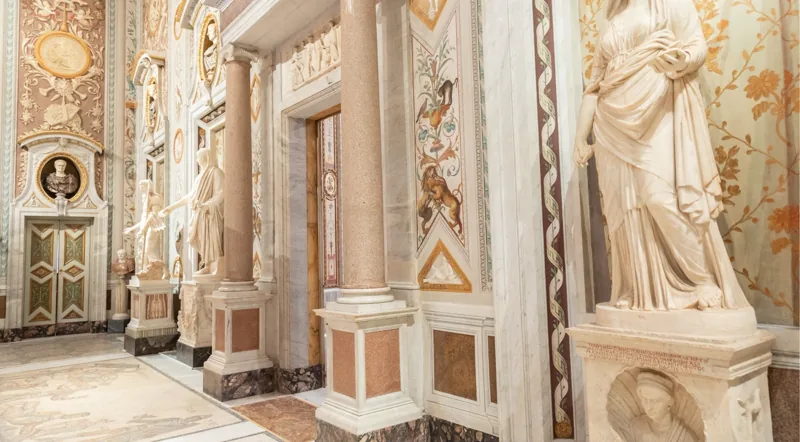
Borghese Gallery: skip-the-line ticket with audio guide
Priority entry with a guaranteed time slot and digital audio guide on Bernini, Caravaggio, Canova, and Raphael. Rated 4.6 from 2,700+ reviews — the easiest way to pair the park and the museum.
Frequently asked questions
Answers to the most common questions about entry, access, and activities at the park.
Is entry to Villa Borghese free?
Yes. Access to the park is free and open, from dawn to dusk. Only some attractions inside are paid, such as the Borghese Gallery, the Bioparco, the National Gallery of Modern Art, and Villa Giulia.
What's the difference between Villa Borghese and the Borghese Gallery?
Villa Borghese is the free public park; the Borghese Gallery is the museum, paid entry and mandatory booking, housed in the Casino Nobile inside the park. You can enter Villa Borghese any time for free, but for the Borghese Gallery you need to book ahead: see our museum guide.
How do you get to Villa Borghese by metro?
By metro Line A, Flaminio stop (ideal for the Piazza del Popolo/Pincio side) or Spagna (convenient for the Trinità dei Monti side). Barberini is also useful if you're staying near Via Veneto/Ludovisi.
What can you see at Villa Borghese in a few hours?
The Pincio Terrace with its view over Piazza del Popolo, the water clock, the small lake with the Temple of Asclepius, Piazza di Siena, and, with more time, one of the museums like the Borghese Gallery.
Can you rent bikes or boats?
Yes: bikes, tandems, e-bikes, and rickshaws at various points in the park (along Viale Goethe, near the Bioparco, and at the Viale delle Belle Arti entrance), and rowboats at the Giardino del Lago's small lake.
Is Villa Borghese suitable for children?
Absolutely: the Bioparco, Cinema dei Piccoli, Casina di Raffaello, a tourist train, ponies, carousels, and wide green spaces make the park one of the top family destinations in Rome.